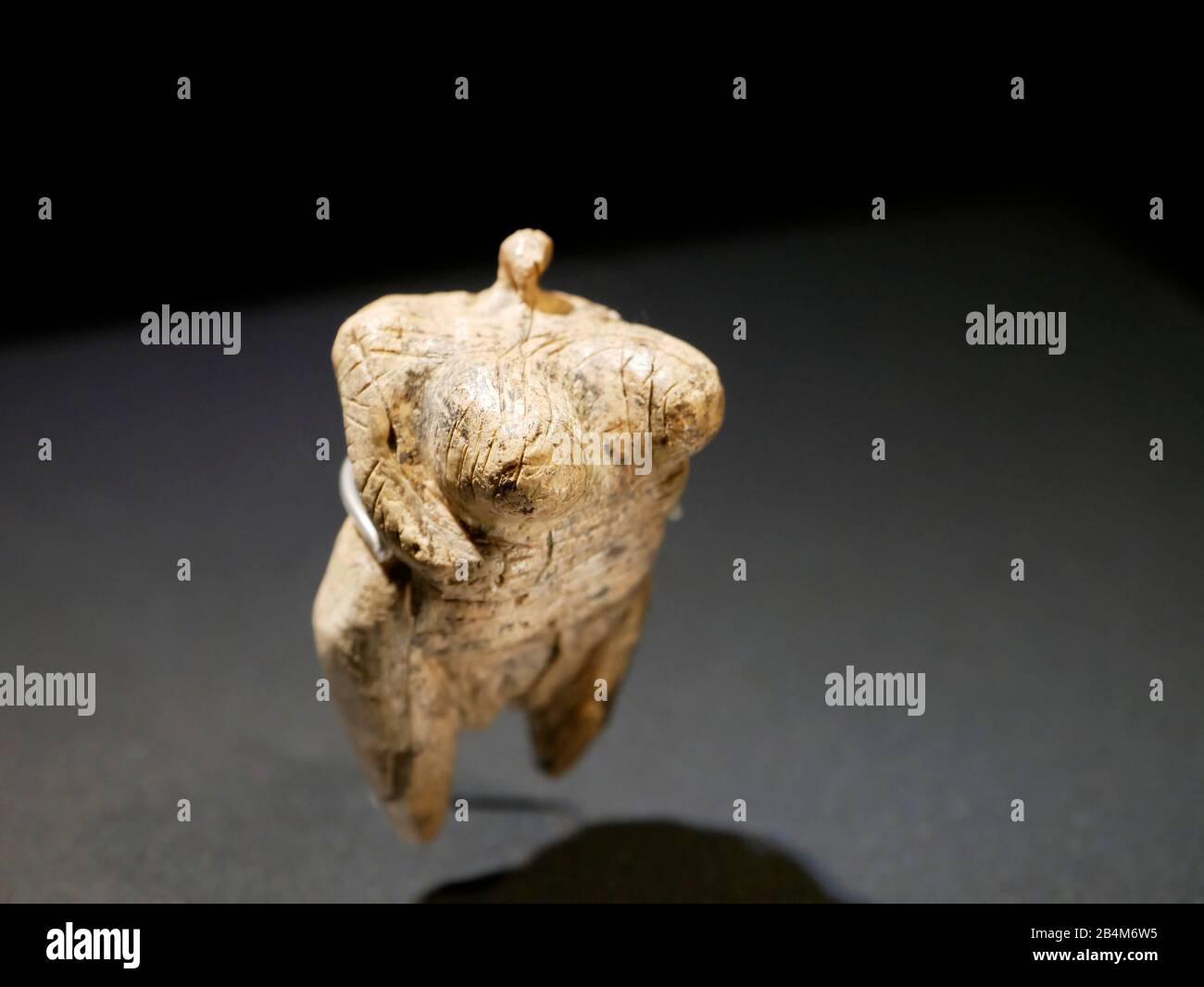
In the realm of prehistoric art, few artifacts captivate the imagination as much as the Venus of Hohle Fels. This small, intricately carved figurine offers a glimpse into the creative and symbolic world of our early human ancestors. Discovered in the Hohle Fels cave in Germany, the Venus of Hohle Fels is one of the oldest known examples of figurative art, dating back to around 40,000 years ago. This remarkable artifact provides valuable insights into the cognitive and cultural capabilities of early humans, particularly those of the Aurignacian culture.
The Discovery of the Venus of Hohle Fels
The Venus of Hohle Fels was unearthed in 2008 by a team of archaeologists led by Nicholas Conard of the University of Tübingen. The figurine was found in the Vogelherd Cave, part of the Ach Valley in southwestern Germany. This region is renowned for its rich archaeological sites, which have yielded numerous significant artifacts from the Paleolithic era. The Venus of Hohle Fels was discovered in a layer of sediment dating to the early Aurignacian period, making it one of the earliest known examples of figurative art.
The Significance of the Venus of Hohle Fels
The Venus of Hohle Fels is significant for several reasons. Firstly, its age places it among the earliest known examples of figurative art, predating many other famous prehistoric artifacts. This makes it a crucial piece in understanding the development of human creativity and symbolic thought. Secondly, the figurine’s detailed carving and the use of ivory as a material highlight the advanced technical skills and artistic abilities of early humans. Lastly, the Venus of Hohle Fels provides insights into the cultural and symbolic practices of the Aurignacian people, who were among the first modern humans to inhabit Europe.
Description and Characteristics
The Venus of Hohle Fels is a small figurine, measuring approximately 6.2 centimeters in length. It is carved from mammoth ivory, a material that was highly valued in the Paleolithic era. The figurine depicts a female figure with exaggerated sexual characteristics, including large breasts, a prominent belly, and a detailed vulva. The head is small and lacks facial features, while the legs and arms are thin and delicate. The overall form is stylized and abstract, emphasizing the female form rather than realistic representation.
The Venus of Hohle Fels is notable for its intricate carving and attention to detail. The artist who created this figurine demonstrated a high level of skill and precision, using fine tools to carve the ivory. The use of ivory as a material is also significant, as it was a valuable and difficult-to-obtain resource in the Paleolithic era. The figurine's small size and portability suggest that it may have been a personal or ritual object, carried by its owner for symbolic or religious purposes.
Interpretation and Symbolism
The Venus of Hohle Fels is often interpreted as a fertility symbol, reflecting the importance of reproduction and fertility in early human societies. The exaggerated sexual characteristics of the figurine may have been intended to invoke or celebrate fertility, or to serve as a protective talisman for women during childbirth. The lack of facial features and the stylized form of the figurine suggest that it was not meant to represent a specific individual but rather a universal symbol of femininity and fertility.
Some scholars have also suggested that the Venus of Hohle Fels may have had a ritual or religious significance. The figurine's small size and portability make it a likely candidate for use in personal or communal rituals, where it may have been used to invoke the blessings of fertility or to protect against misfortune. The detailed carving and use of ivory also suggest that the figurine was a valuable and cherished object, likely imbued with symbolic or spiritual significance.
Comparisons with Other Venus Figurines
The Venus of Hohle Fels is one of several similar figurines discovered in Europe, collectively known as “Venus figurines.” These figurines share many characteristics, including exaggerated sexual features and a stylized, abstract form. Some of the most famous examples include the Venus of Willendorf, the Venus of Lespugue, and the Venus of Dolní Věstonice. While each of these figurines has its unique features, they all reflect a common cultural and symbolic tradition that spanned much of Europe during the Paleolithic era.
Comparing the Venus of Hohle Fels with other Venus figurines can provide valuable insights into the cultural and symbolic practices of early human societies. For example, the Venus of Willendorf, discovered in Austria, shares many similarities with the Venus of Hohle Fels, including its small size, stylized form, and exaggerated sexual characteristics. However, the Venus of Willendorf is carved from limestone rather than ivory, and its surface is decorated with intricate patterns and markings. These differences suggest that while the two figurines may have served similar symbolic or ritual functions, they were created by different cultural groups or for different purposes.
Another notable example is the Venus of Lespugue, discovered in France. This figurine is also carved from ivory and features exaggerated sexual characteristics, but it is larger and more detailed than the Venus of Hohle Fels. The Venus of Lespugue also includes intricate carvings on its surface, including patterns and markings that may have had symbolic or ritual significance. These differences highlight the diversity of artistic and symbolic practices within the Paleolithic era, even among figurines that share many common features.
The Cultural Context of the Venus of Hohle Fels
The Venus of Hohle Fels was created during the Aurignacian period, a cultural phase that spanned from around 43,000 to 33,000 years ago. The Aurignacian culture is associated with the earliest modern humans to inhabit Europe, who migrated from Africa and the Middle East. These early humans were skilled toolmakers, hunters, and artists, and they developed a rich cultural and symbolic tradition that included the creation of figurative art, jewelry, and decorative objects.
The Aurignacian people were also known for their use of ivory as a material for art and decoration. Ivory was a valuable and difficult-to-obtain resource, and its use in the creation of the Venus of Hohle Fels highlights the importance of this material in Aurignacian culture. The figurine's detailed carving and attention to detail also reflect the advanced technical skills and artistic abilities of the Aurignacian people, who were among the first to develop complex symbolic and artistic practices.
The Venus of Hohle Fels provides valuable insights into the cultural and symbolic practices of the Aurignacian people. Its small size and portability suggest that it may have been a personal or ritual object, carried by its owner for symbolic or religious purposes. The figurine's detailed carving and use of ivory also suggest that it was a valuable and cherished object, likely imbued with symbolic or spiritual significance. The Venus of Hohle Fels is a testament to the creativity and cultural sophistication of the Aurignacian people, who developed a rich and complex symbolic tradition that spanned much of Europe during the Paleolithic era.
The Scientific Study of the Venus of Hohle Fels
The Venus of Hohle Fels has been the subject of extensive scientific study since its discovery. Archaeologists and anthropologists have analyzed the figurine’s material, carving techniques, and symbolic significance to gain insights into the cultural and symbolic practices of the Aurignacian people. The use of modern scientific techniques, such as radiocarbon dating and micro-CT scanning, has allowed researchers to determine the figurine’s age and to study its internal structure in detail.
Radiocarbon dating has been used to determine the age of the Venus of Hohle Fels, placing it at around 40,000 years old. This makes it one of the earliest known examples of figurative art, predating many other famous prehistoric artifacts. Micro-CT scanning has allowed researchers to study the figurine's internal structure in detail, revealing the techniques used to carve the ivory and the level of skill and precision demonstrated by the artist. These scientific studies have provided valuable insights into the cultural and symbolic practices of the Aurignacian people, as well as the technical and artistic abilities of early humans.
In addition to scientific analysis, the Venus of Hohle Fels has also been the subject of artistic and cultural interpretation. Artists and scholars have created replicas and interpretations of the figurine, exploring its symbolic and cultural significance in modern contexts. These interpretations highlight the enduring relevance of the Venus of Hohle Fels as a symbol of human creativity and cultural expression, and they demonstrate the ongoing fascination with this remarkable artifact.
The Legacy of the Venus of Hohle Fels
The Venus of Hohle Fels has had a significant impact on our understanding of early human culture and symbolism. Its discovery and study have challenged and expanded our knowledge of the cognitive and artistic capabilities of early humans, as well as the cultural and symbolic practices of the Aurignacian people. The figurine’s detailed carving, use of ivory, and symbolic significance highlight the advanced technical and artistic skills of early humans, as well as their ability to create complex and meaningful symbolic objects.
The Venus of Hohle Fels has also inspired numerous artistic and cultural interpretations, demonstrating its enduring relevance as a symbol of human creativity and cultural expression. The figurine's small size and portability suggest that it may have been a personal or ritual object, carried by its owner for symbolic or religious purposes. Its detailed carving and use of ivory also suggest that it was a valuable and cherished object, likely imbued with symbolic or spiritual significance. The Venus of Hohle Fels is a testament to the creativity and cultural sophistication of the Aurignacian people, who developed a rich and complex symbolic tradition that spanned much of Europe during the Paleolithic era.
The Venus of Hohle Fels has also had an impact on modern art and culture. Its stylized and abstract form has inspired numerous artists and designers, who have created modern interpretations and adaptations of the figurine. These interpretations highlight the enduring relevance of the Venus of Hohle Fels as a symbol of human creativity and cultural expression, and they demonstrate the ongoing fascination with this remarkable artifact. The figurine's detailed carving and use of ivory also serve as a reminder of the advanced technical and artistic skills of early humans, as well as their ability to create complex and meaningful symbolic objects.
The Venus of Hohle Fels has also been the subject of numerous exhibitions and public displays, allowing people from around the world to appreciate its beauty and significance. These exhibitions have highlighted the figurine's cultural and historical importance, as well as its enduring relevance as a symbol of human creativity and cultural expression. The Venus of Hohle Fels has also been featured in numerous books, documentaries, and other media, further expanding its reach and impact.
The Venus of Hohle Fels has also inspired numerous scientific and academic studies, which have explored its cultural and symbolic significance in detail. These studies have provided valuable insights into the cognitive and artistic capabilities of early humans, as well as the cultural and symbolic practices of the Aurignacian people. The figurine's detailed carving, use of ivory, and symbolic significance highlight the advanced technical and artistic skills of early humans, as well as their ability to create complex and meaningful symbolic objects. These studies have also challenged and expanded our understanding of the development of human culture and symbolism, as well as the role of art and creativity in early human societies.
The Venus of Hohle Fels has also been the subject of numerous debates and controversies, which have explored its cultural and symbolic significance in detail. These debates have highlighted the complex and multifaceted nature of the figurine, as well as the diverse interpretations and perspectives that it has inspired. The Venus of Hohle Fels has also been the subject of numerous artistic and cultural interpretations, which have explored its symbolic and cultural significance in modern contexts. These interpretations highlight the enduring relevance of the Venus of Hohle Fels as a symbol of human creativity and cultural expression, and they demonstrate the ongoing fascination with this remarkable artifact.
The Venus of Hohle Fels has also been the subject of numerous conservation and preservation efforts, which have aimed to protect and preserve this remarkable artifact for future generations. These efforts have included the use of modern conservation techniques, as well as the development of educational and outreach programs to raise awareness of the figurine's cultural and historical significance. The Venus of Hohle Fels has also been the subject of numerous research and study projects, which have aimed to deepen our understanding of its cultural and symbolic significance, as well as its role in the development of human culture and symbolism.
The Venus of Hohle Fels has also been the subject of numerous collaborations and partnerships, which have aimed to bring together experts from diverse fields to study and interpret this remarkable artifact. These collaborations have included archaeologists, anthropologists, artists, and conservators, who have worked together to explore the cultural and symbolic significance of the Venus of Hohle Fels, as well as its role in the development of human culture and symbolism. These collaborations have also highlighted the importance of interdisciplinary and collaborative approaches to the study of early human culture and symbolism, as well as the role of art and creativity in early human societies.
The Venus of Hohle Fels has also been the subject of numerous public engagement and outreach efforts, which have aimed to raise awareness of its cultural and historical significance, as well as its enduring relevance as a symbol of human creativity and cultural expression. These efforts have included the development of educational materials, public lectures, and exhibitions, as well as the use of social media and other digital platforms to reach a wider audience. The Venus of Hohle Fels has also been the subject of numerous community and cultural events, which have aimed to celebrate and honor this remarkable artifact, as well as its role in the development of human culture and symbolism.
The Venus of Hohle Fels has also been the subject of numerous research and study projects, which have aimed to deepen our understanding of its cultural and symbolic significance, as well as its role in the development of human culture and symbolism. These projects have included the use of modern scientific techniques, as well as the development of new interpretive frameworks and methodologies. The Venus of Hohle Fels has also been the subject of numerous artistic and cultural interpretations, which have explored its symbolic and cultural significance in modern contexts. These interpretations highlight the enduring relevance of the Venus of Hohle Fels as a symbol of human creativity and cultural expression, and they demonstrate the ongoing fascination with this remarkable artifact.
The Venus of Hohle Fels has also been the subject of numerous debates and controversies, which have explored its cultural and symbolic significance in detail. These debates have highlighted the complex and multifaceted nature of the figurine, as well as the diverse interpretations and perspectives that it has inspired. The Venus of Hohle Fels has also been the subject of numerous artistic and cultural interpretations, which have explored its symbolic and cultural significance in modern contexts. These interpretations highlight the enduring relevance of the Venus of Hohle Fels as a symbol of human creativity and cultural expression, and they demonstrate the ongoing fascination with this remarkable artifact.
The Venus of Hohle Fels has also been the subject of numerous conservation and preservation efforts, which have aimed to protect and preserve this remarkable artifact for future generations. These efforts have included the use of modern conservation techniques, as well as the development of educational and outreach programs to raise awareness of the figurine's cultural and historical significance. The Venus of Hohle Fels has also been the subject of numerous research and study projects, which have aimed to deepen our understanding of its cultural and symbolic significance, as well as its role in the development of human culture and symbolism.
The Venus of Hohle Fels has also been the subject of numerous collaborations and partnerships, which have aimed to bring together experts from diverse fields to study and interpret this remarkable artifact. These collaborations have included archaeologists, anthropologists, artists, and conservators, who have worked together to explore the cultural and symbolic significance of the Venus of Hohle Fels, as well as its role in the development of human culture and symbolism. These collaborations have also highlighted the importance of interdisciplinary and collaborative approaches to the study of early human culture and symbolism, as well as the role of art and creativity in early human societies.
The Venus of Hohle Fels has also been the subject of numerous public engagement and outreach efforts, which have aimed to raise awareness of its cultural and historical significance, as well as its enduring relevance as a symbol of human creativity and cultural expression. These efforts have included the development of educational materials, public lectures, and exhibitions, as well as the use of social media and other digital platforms to reach a wider audience. The Venus of Hohle Fels has also been the subject of numerous community and cultural events, which have aimed to celebrate and honor this remarkable artifact, as well as its role in the development of human culture and symbolism.
The Venus of Hohle Fels has also been the subject of numerous research and study projects, which have aimed to deepen our understanding of its cultural and symbolic significance, as well as its role in the development of human culture and symbolism. These projects have included the use of modern scientific techniques, as well as the development of new interpretive frameworks and methodologies. The Venus of Hohle Fels has also been the subject of numerous artistic and cultural interpretations, which have explored its symbolic and cultural significance in modern contexts. These interpretations highlight the enduring relevance of the Venus of Hohle Fels as a symbol of human creativity and cultural expression, and they demonstrate the ongoing fascination with this remarkable artifact.
The Venus of Hohle Fels has also been the subject of numerous debates and controversies, which have explored its cultural and symbolic significance in detail. These debates have highlighted the complex and multifaceted nature of the figurine, as well as the diverse interpretations and perspectives that it has inspired. The Venus of Hohle Fels has also been the subject of numerous artistic and cultural interpretations, which have explored its symbolic and cultural significance in modern contexts. These interpretations highlight the enduring relevance of the Venus of Hohle Fels as a symbol of human creativity and cultural expression, and they demonstrate the ongoing fascination with this remarkable artifact.
The Venus of Hohle Fels has also been the subject of numerous conservation and preservation efforts, which have aimed to protect and preserve this remarkable artifact for future generations. These efforts have included the use of modern conservation techniques, as well as the development of educational and outreach programs to raise awareness of the figurine's cultural and historical significance. The Venus of Hohle Fels has also been the subject of numerous research and study projects, which have aimed to deepen our understanding of its cultural and symbolic significance, as well as its role in the development of human culture and symbolism.
The Venus of Hohle Fels has also been the subject of numerous collaborations and partnerships, which have aimed to bring together experts from diverse fields to study and interpret this remarkable artifact. These collaborations have included archaeologists, anthropologists, artists, and conservators, who have worked together to explore the cultural and symbolic significance of the Venus of Hohle Fels, as well as its role in the development of human culture and symbolism. These collaborations have also highlighted the importance of interdisciplinary and collaborative approaches to the study of early human culture and symbolism, as well as the role of art and creativity in early human societies.
The Venus of Hohle Fels has also been the subject of numerous public engagement and outreach efforts, which have aimed to raise awareness of its cultural and historical significance, as well as its enduring relevance as a symbol of human creativity and cultural expression. These efforts have included the development
Related Terms:
- venus sculptures
- venus of hohle fels pronunciation
- venus of hohle fels meaning
- venus of lespugue
- venus figurines
- venus of laussel